Why won't my storefront door latch even though it opens easily?
If a commercial door opens fine but won't latch shut, the most common cause is a vertical rod exit device that's out of adjustment. These doors use metal rods that run up and down inside the door, locking into the frame at the top and bottom instead of just at handle height. When those rods fall out of alignment, the door can swing open easily but never actually catch when it closes.
What is a surface vertical rod panic bar, exactly?
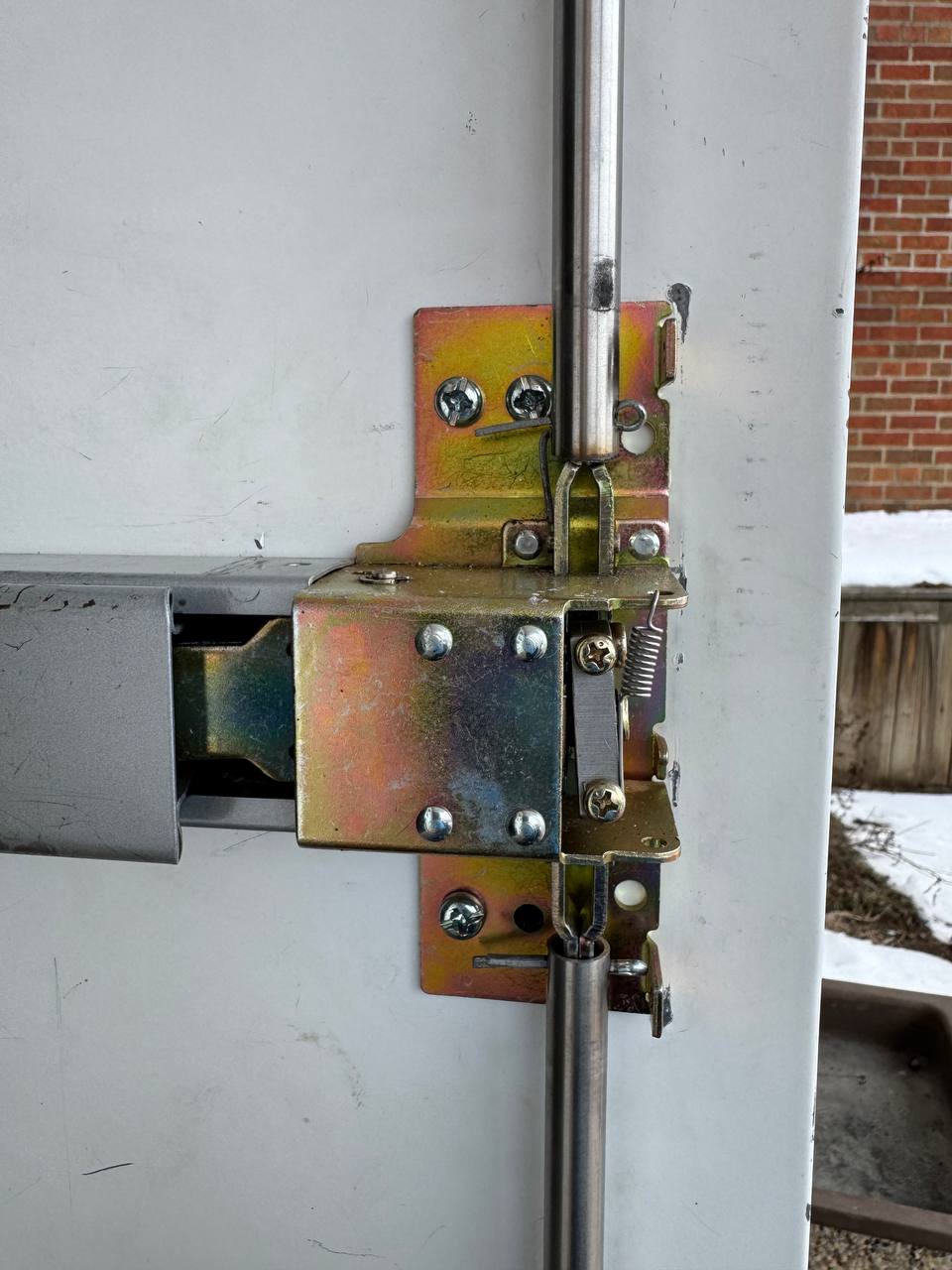
A surface vertical rod, often shortened to SVR, is a type of exit device mounted on the surface of the door with metal rods running upward and downward from the crash bar. Pushing the bar retracts both rods at once, releasing the door from latch points at the top of the frame and the bottom of the frame. This is different from a standard panic bar, which usually locks at one point near the handle. SVR hardware is common on storefronts, double doors, and commercial exits that need stronger, code-required locking at multiple points.
How do you fix a commercial door that won't close properly?
Before assuming the whole device is broken, a locksmith checks a few specific things first:
- Whether the top and bottom rods are actually extending fully when the bar is released
- Whether the strike points at the head and sill of the frame are properly aligned
- Whether the rod guides are bent, loose, or worn from repeated use
- Whether the door itself has shifted or sagged, throwing off the whole alignment
- Whether the spring tension inside the device has weakened over time
Most of the time, the device itself isn't broken, it's just out of adjustment after months or years of heavy daily traffic.
Why do vertical rod devices fall out of adjustment?
Commercial doors get pushed open dozens or even hundreds of times a day, far more than a typical home door. That constant use gradually shifts the rods, loosens mounting hardware, and wears down the guides that keep everything lined up. Cold weather can make this worse too, since metal contracts slightly and can throw off tolerances that were fine in warmer months.
Can a locksmith repair vertical rod hardware, or does it need full replacement?
Most vertical rod problems can be repaired rather than replaced. Adjusting the rod length, realigning the strike points, and replacing worn guides usually solves the latching problem completely. Full replacement only makes sense when the device itself is cracked, the springs have failed beyond adjustment, or a business wants to upgrade to newer hardware.
A vertical rod repair near Westerville
Last week we got a call from a business near Westerville whose back exit door wasn't latching properly. Staff could open it with no trouble, but it never locked securely when it swung shut, which meant the business was leaving that door unsecured every night.
Our technician inspected the panic bar and found the vertical rods had shifted out of position from months of daily push-and-release use. He adjusted the rod guides and the strike points at the top and bottom of the frame, and the door now latches solidly every time it closes.
Is a door that won't latch a security risk for my business?
Yes, and it's worth taking seriously. A door that looks closed but isn't actually latched can be pushed open from outside with very little effort, which defeats the entire purpose of having an exit device in the first place. This is especially important on side and rear doors that don't get checked as often as the main entrance. If you're unsure how secure your current setup is, our commercial lock services team can take a look at the whole building, not just one door.
Vertical rod panic bar repair across Westerville and Columbus
We troubleshoot and repair surface vertical rod exit devices for businesses across Westerville, Worthington, Dublin, and the rest of our service area. If your storefront or commercial door opens easily but won't latch shut, don't wait until it becomes an obvious security gap. Visit our exit devices and panic bars page, or check out door and hardware adjustment if the issue seems related to the door itself rather than just the hardware.
Frequently asked questions about vertical rod panic bar repair
What's the difference between a vertical rod device and a standard panic bar?
A standard panic bar usually latches at one point near the handle, while a vertical rod device locks at the top and bottom of the door frame using rods that extend from the crash bar. Vertical rod systems are common where stronger or code-required multi-point locking is needed.
Why does my door latch sometimes but not other times?
Inconsistent latching usually points to alignment that's just barely off, rather than a fully broken device. Small changes in temperature, humidity, or door position can be enough to push it from working to not working.
Can I adjust the rods myself without calling a locksmith?
It's possible with the right tools and some trial and error, but getting both the top and bottom strike points aligned correctly often takes a few attempts. A locksmith can usually solve it faster and avoid repeated adjustment trips.
How often should vertical rod hardware be checked?
There's no strict schedule, but a yearly check is a reasonable habit for any commercial exit door, especially one used heavily by staff and customers throughout the day.
Does cold weather really affect how these locks work?
Yes. Metal parts contract slightly in cold temperatures, which can be enough to push an already slightly misaligned device from working to not catching at all.
Is this the same hardware required for fire code compliance?
Many vertical rod and panic bar systems are installed specifically to meet fire and building code requirements for emergency egress. If yours isn't latching properly, it's worth having it checked sooner rather than later for that reason alone. If your business is also looking at broader access control, our master key systems page covers how that works alongside exit hardware like this.